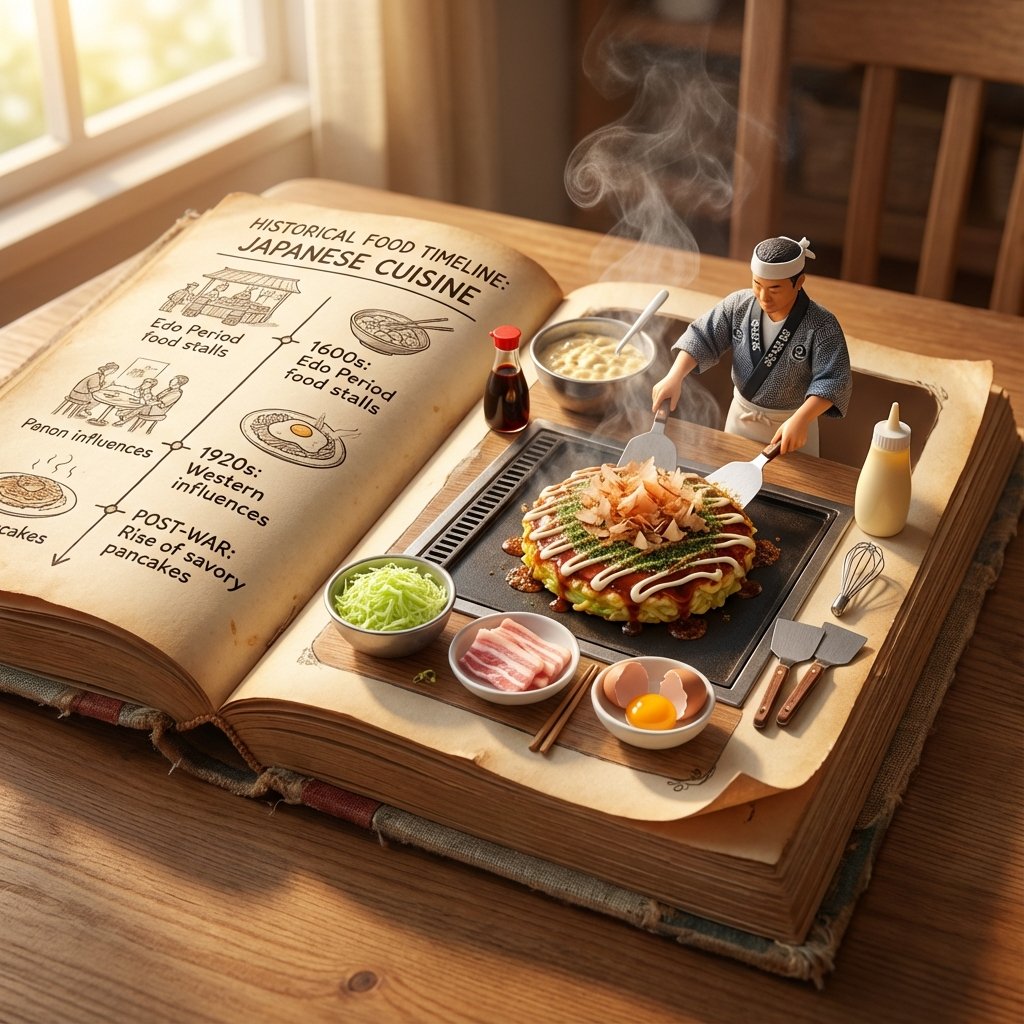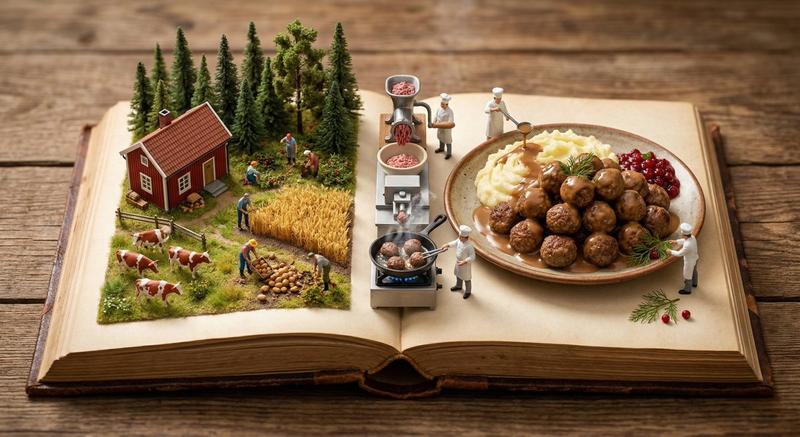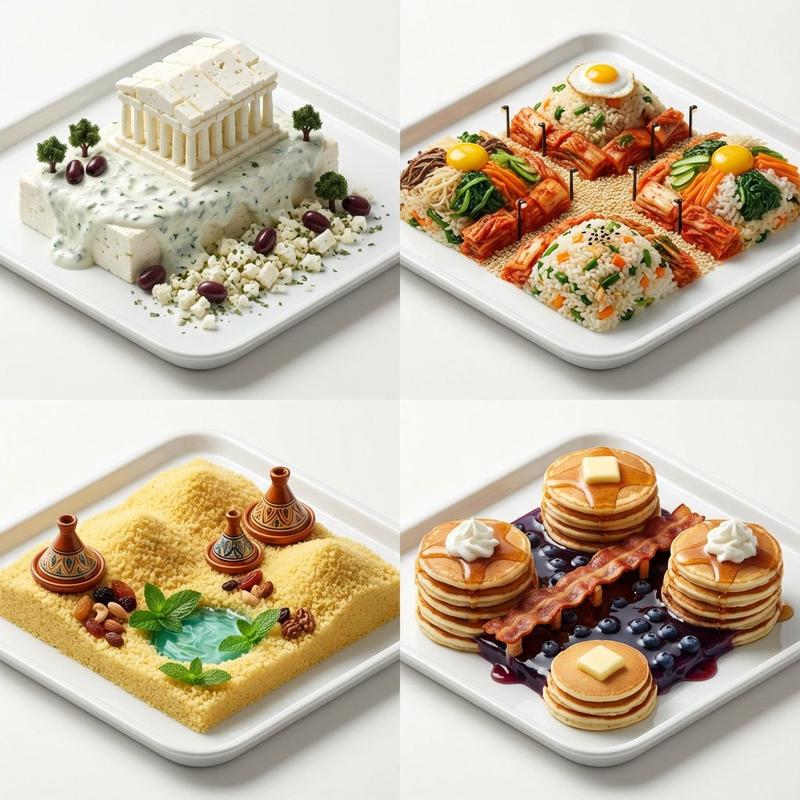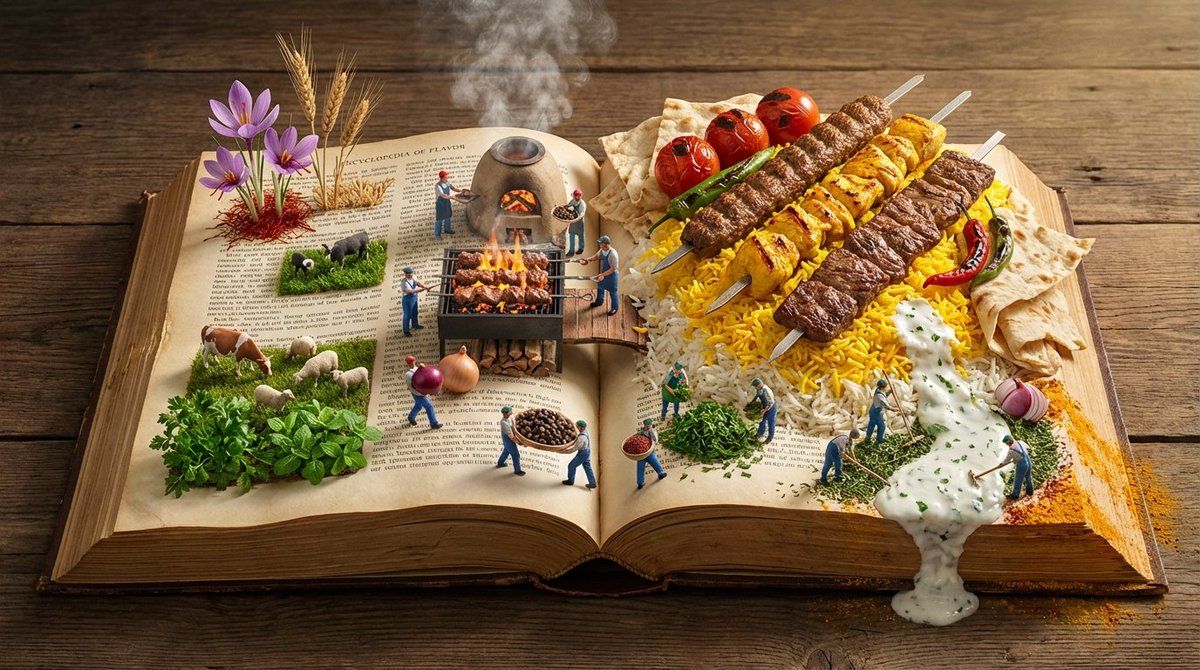
风味百科立体模型生成器
Prompt
Input Variable:   [{argument name="cuisine or dish" default="INSERT CUISINE OR DISH"}] (e.g., Persian Kebabs, Japanese Sushi, Italian Pasta, Mexican Tacos)

  System Instruction:
Generate a hyper-realistic, wide-angle (16:9) 3D diorama of an "Encyclopedia of Flavor." Use the following logic to procedurally generate the scene:

  1. Flavor Profiling:
      Analyze the Input:   Determine the   Region  ,   Staple Ingredients  , and   Cooking Method  .
         (e.g., Kebab = Fire/Coal, Rice, Meat. Sushi = Water, Fish, Rice).
      The Terrain:   The pages of the book must physically transform into the landscape of the cuisine.
         Grain:  Rice or Couscous forms dunes.
         Liquid:  Sauces or Broths form rivers.
         Solid:  Bread or Meat forms mountains/cliffs.

  2. Container (The Wide Atlas):
      The Object:   A massive, horizontal   Landscape-Format Atlas   lying open on an aged wooden banquet table.
      The Spine:   Runs horizontally through the center, acting as the "Equator" or "Main Road" of the scene.
      The Paper:   Parchment texture. The edges of the pages are tattered and stained with spices (Saffron, Paprika, Turmeric).

  3. Panoramic Composition (Left to Right Flow):
  CRITICAL:   Do not place distinct plates. Create a continuous flow across the open spread.
      Left Side (The Origin - Agriculture):   The raw ingredients grow out of the paper.
         (e.g., Wheat stalks rising from the text; Cattle grazing on parsley fields; Fishermen casting nets into ink-blue water).
      Center (The Process - The Kitchen):   The spine is the cooking zone.
         (e.g., A miniature Tandoor oven or Grill built into the book binding; Steam rising volumetrically).
      Right Side (The Result - The Feast):   The finished dish explodes in scale.
         (e.g., A mountain of Saffron Rice topped with the Kebab; A Ziggurat of Sushi).

  4. The Micro-Population
      The Figures:   1:87 Scale (HO Scale) figures populate the landscape.
      The Action:   They are  working  the food.
         Harvesting:  Picking herbs from the margins.
         Transporting:  Carrying giant peppercorns like boulders.
         Cooking:  Using flamethrowers to char the meat or rakes to fluff the rice.

  5. Lighting & Atmosphere:
      Aspect Ratio:     16:9 Horizontal.
      Lighting:     "Golden Hour"   side-lighting. It should skim across the texture of the food and the paper grain, emphasizing the "Landscape" feel.
      Steam:   Volumetric steam connects the three zones (Left, Center, Right).

Output: ONE image, 16:9 Aspect Ratio, Macro Diorama Photography, Octane Render, High Texture Fidelity.- Category
- 创意图片
- Model
- Nano Banana Pro
- Creator
- Gadgetify
- Source ID
- 5993693b-66f8-42b4-9676-cab30ff5c563
- Published
- Mar 8, 2026
Views0