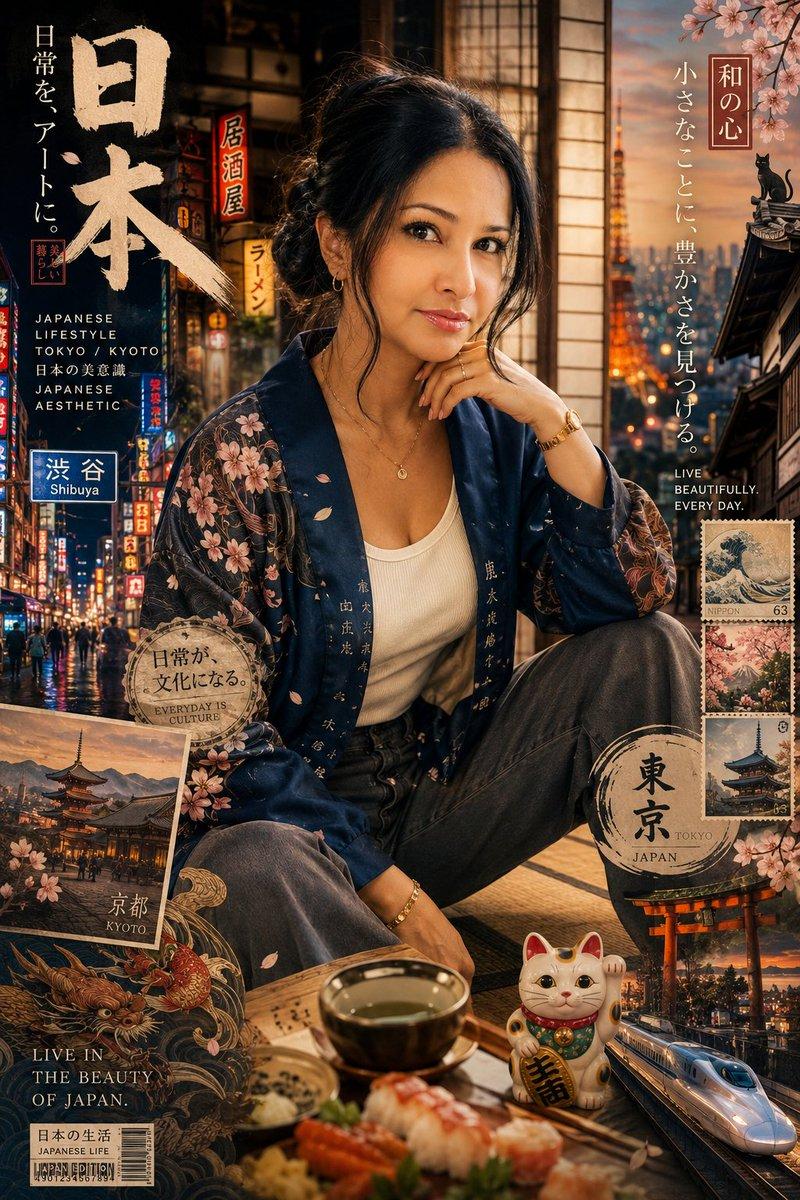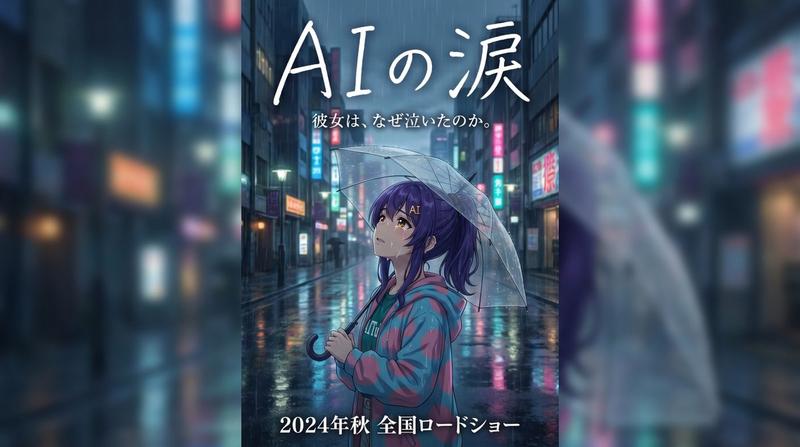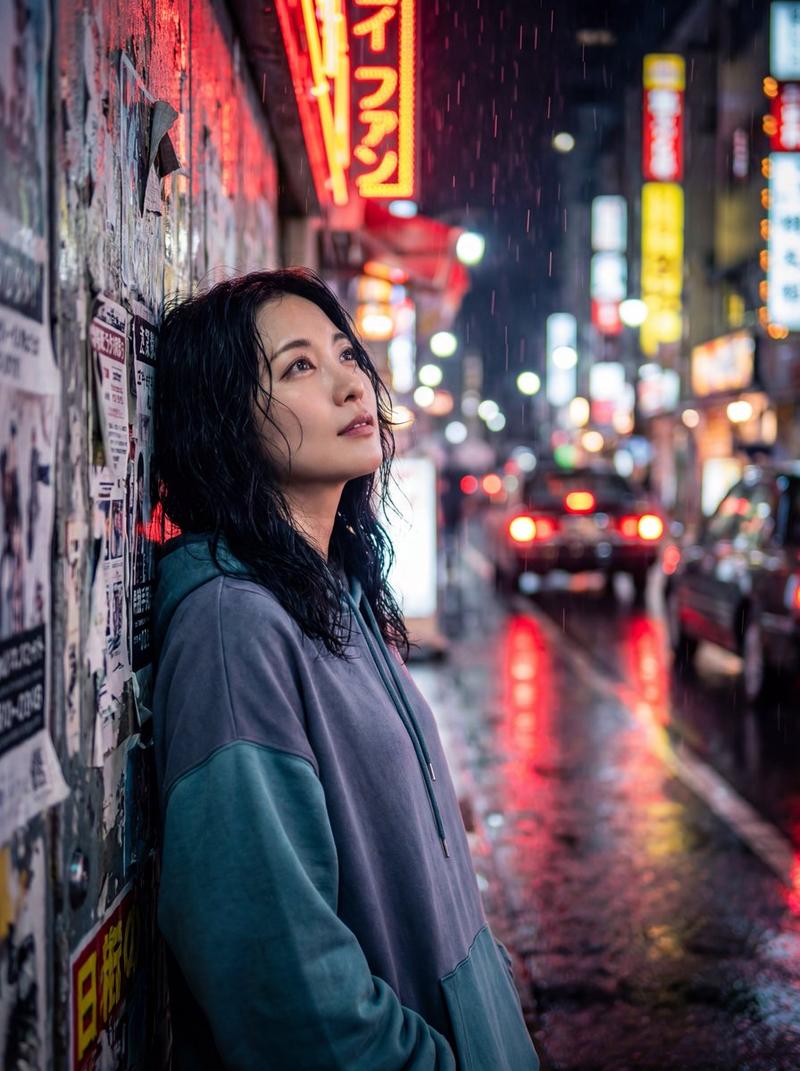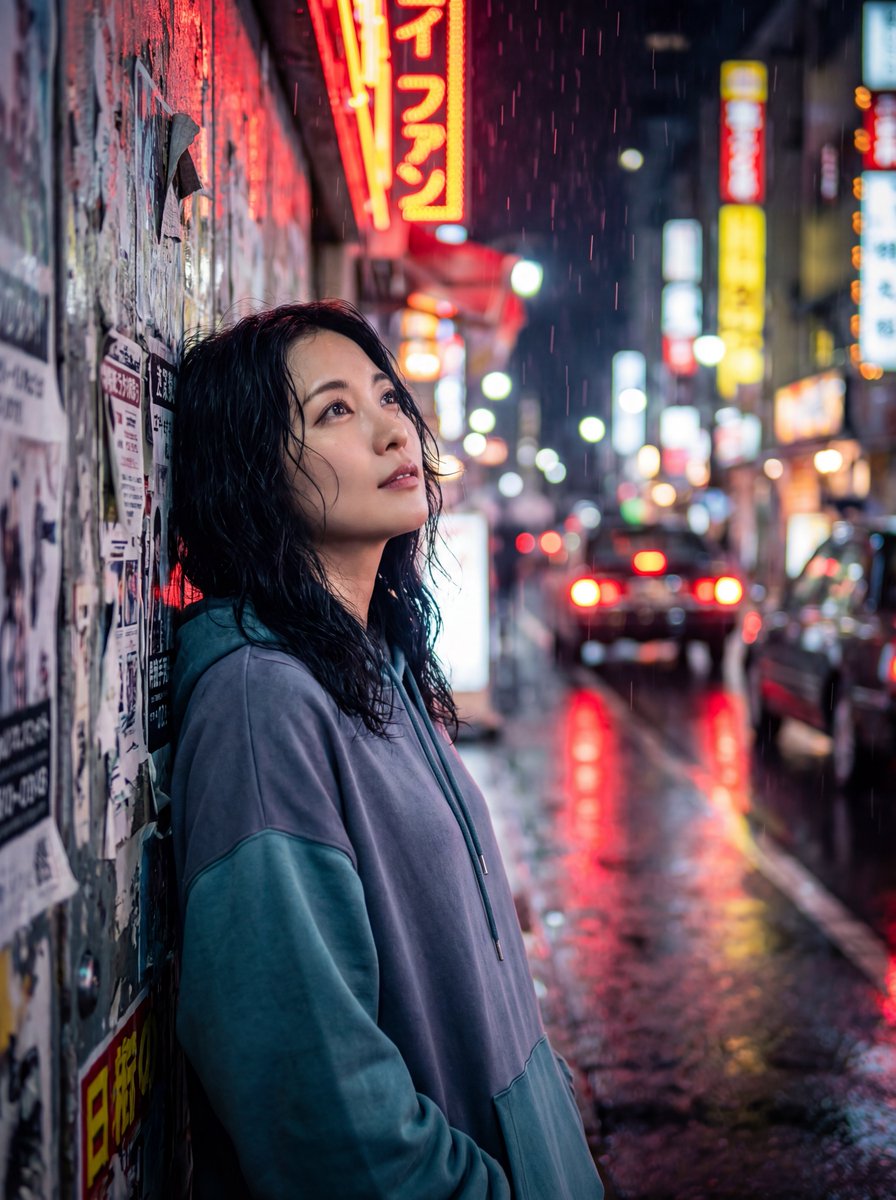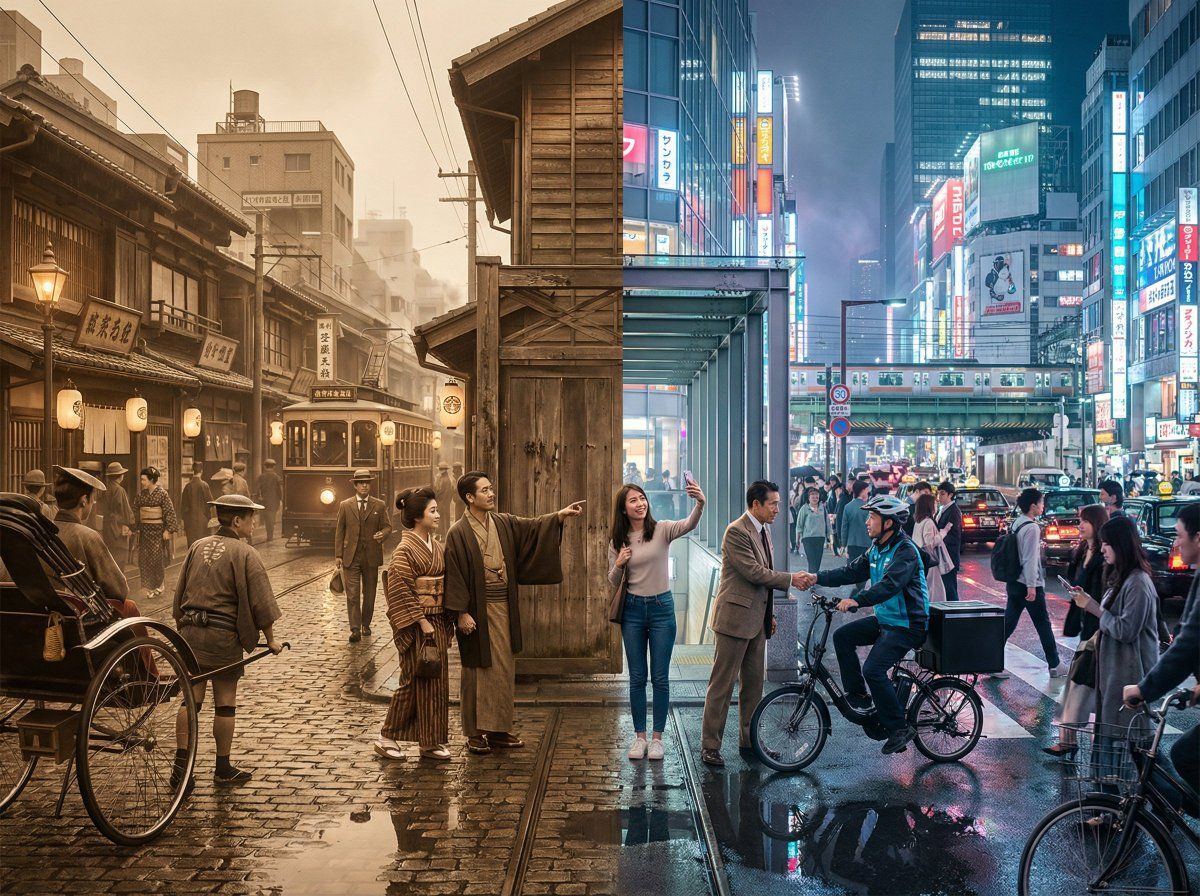
东京时间融合分屏
Prompt
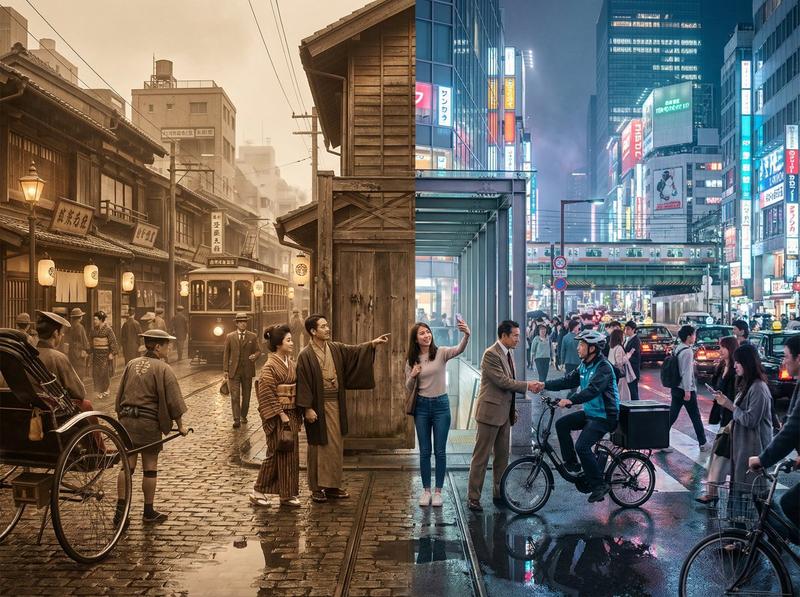
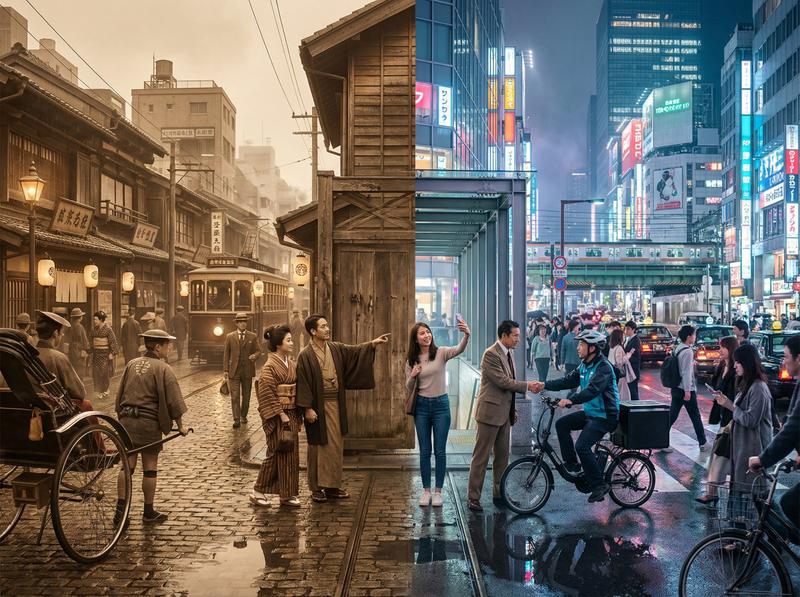
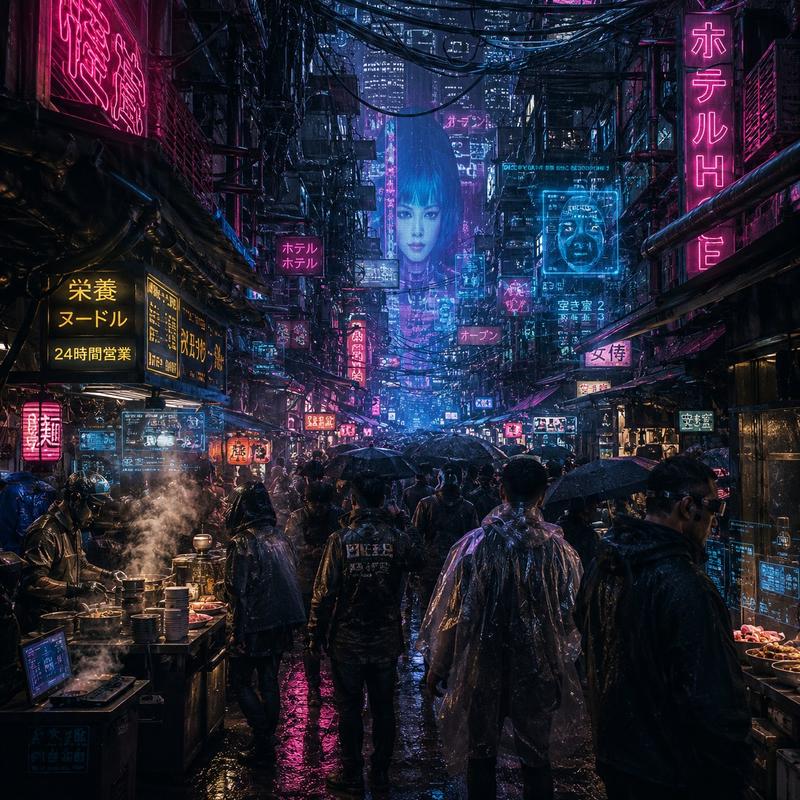
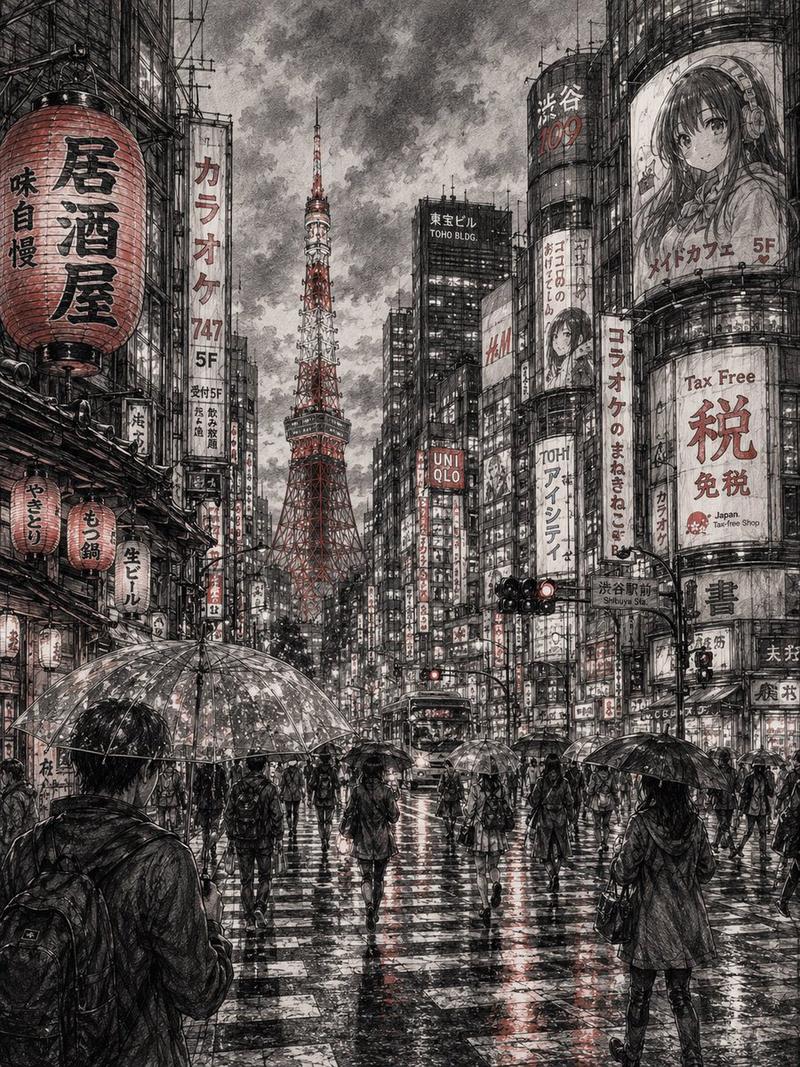
Horizontal split-screen cinematic wide shot of {argument name="city" default="Tokyo city"} seamlessly blending two eras: {argument name="era 1" default="1920s"} on the left and {argument name="era 2" default="present day"} on the right, merging organically in the center with transitional materials and interactions between people from both times.,
  "subject": "Tokyo city split between 1920s and present day with people interacting across eras",
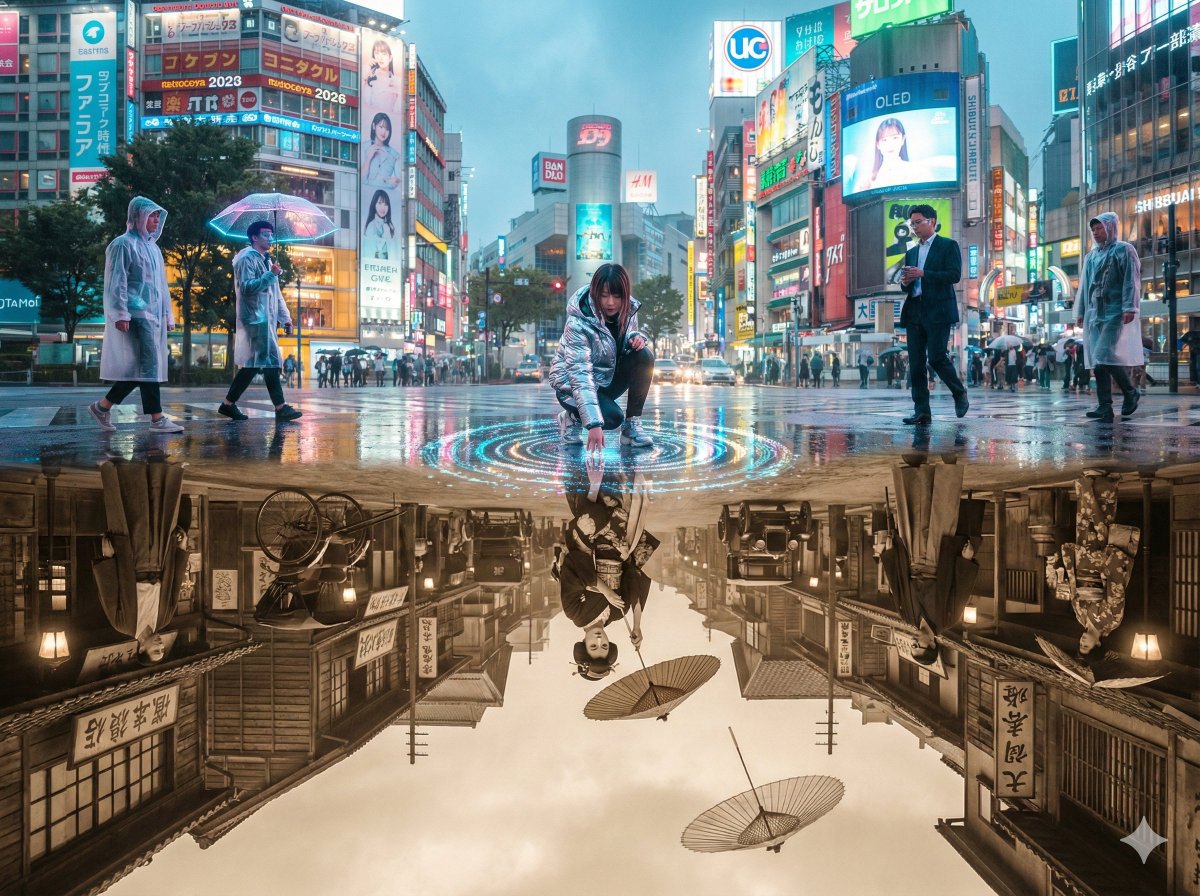
  "environment": "Urban Tokyo streetscape transitioning from wooden machiya shops, tiled roofs, narrow alleys, rickshaws, vintage trams and paper lanterns on the left to glass-and-steel skyscrapers, neon-lit storefronts, elevated train lines, LED billboards, sleek cafes, bicycles, taxis and compact cars on the right; wet reflective pavement and blended center where gates, tracks and lighting morph into modern equivalents",
  "style": "photorealistic, cinematic, ultra-detailed, historically accurate period detail on left and crisp contemporary detail on right",
  "lighting": "mixed cinematic lighting: soft warm sepia fill on the 1920s left with subtle film-grain texture, cool neon backlight and high-contrast illumination on the present-day right, volumetric city fog and atmospheric particles across the scene, balanced color grading to preserve both eras",
  "camera": {
    "angle": "eye-level wide-angle",
    "distance": "wide shot (cinematic 4:3 composition)",
    "depth_of_field": "dynamic depth of field (selective focus across planes)",
    "focus": "primary focus on the midground center where era interactions occur, with layered focus into foreground and background details"
  },
  "composition": {
    "framing": "horizontal split-screen blended composition, cinematic wide 4:3 framing",
    "subject_placement": "left half dominated by 1920s elements, right half by modern elements, central seam blended organically with key human interactions placed near center rule-of-thirds points",
    "foreground": "wet pavement reflections, close pedestrians from both eras, rickshaw wheel and modern bicycle tire, scattered period props newspapers and modern items smartphones",
    "background": "left: narrow alleys, vintage trams, tiled roofs and paper signs; right: elevated train lines, skyscrapers, LED billboards and neon storefronts; distant atmospheric fog and city lights unifying the skyline",
    "negative_space": "subtle open sky and upper building massing to avoid clutter while maintaining cinematic breadth"
  },
  "mood": "cinematic, nostalgic on the left, vivid and energetic on the right, overall sense of curiosity and surprise from human interactions, narrative and time-travel intrigue",
  "color_palette": [
    "sepia brown",
    "warm amber",
    "cool cyan",
    "neon magenta",
    "neutral concrete grays"
  ],
  "technical": {
    "render_type": "photorealistic photo",
    "post_processing": []
}- Category
- 创意图片
- Model
- Nano Banana Pro
- Creator
- ANKIT PATEL 🇮🇳 | AI
- Source ID
- 62bcb3da-6c0c-4223-8ee5-1bf260d7ac24
- Published
- Mar 8, 2026
Views0