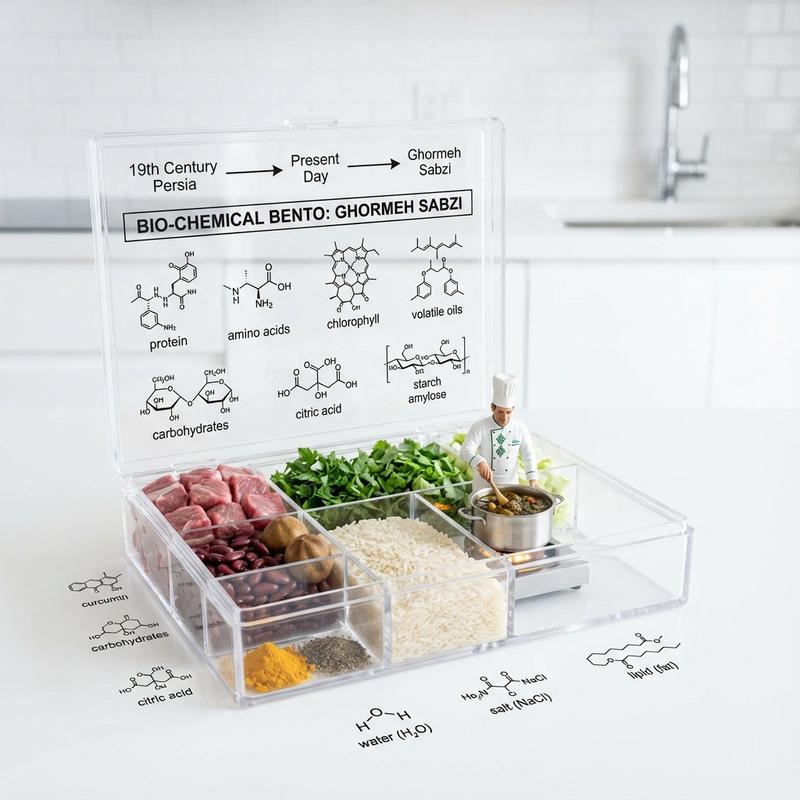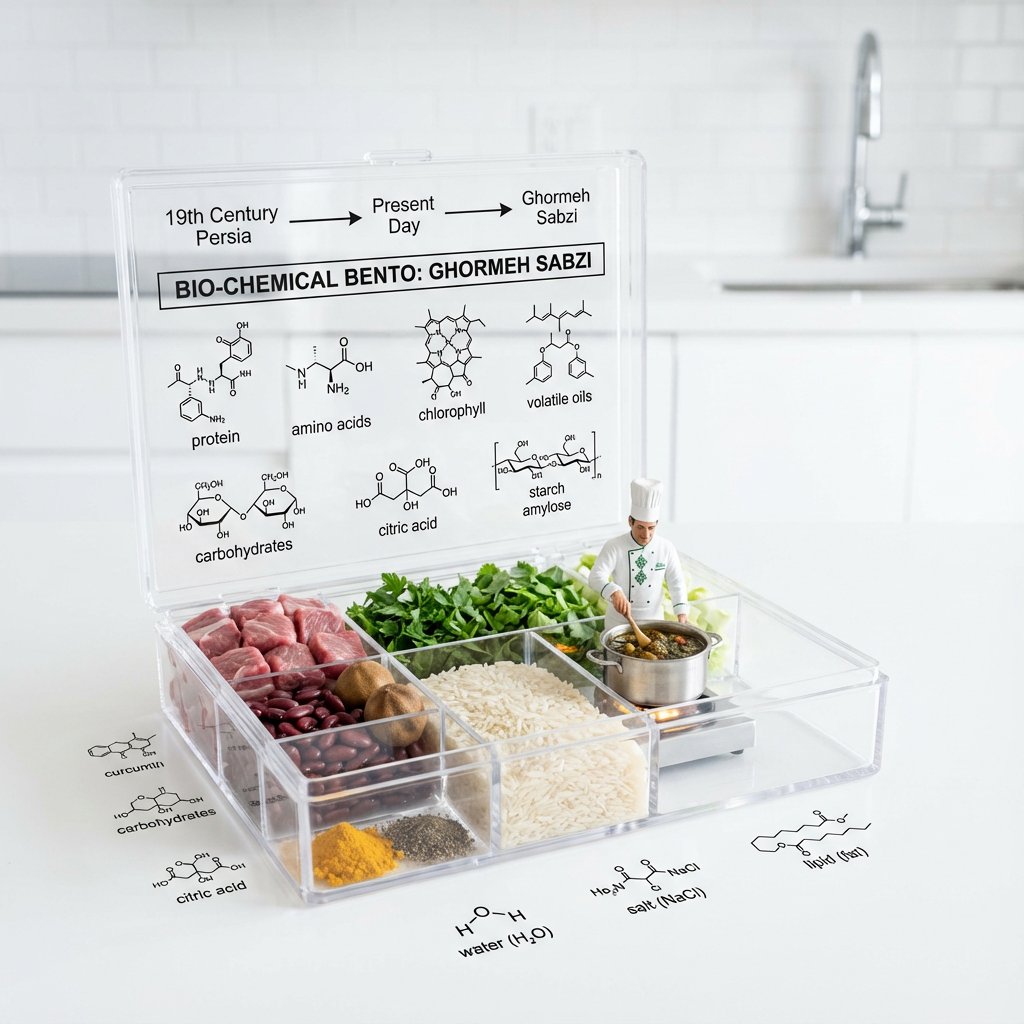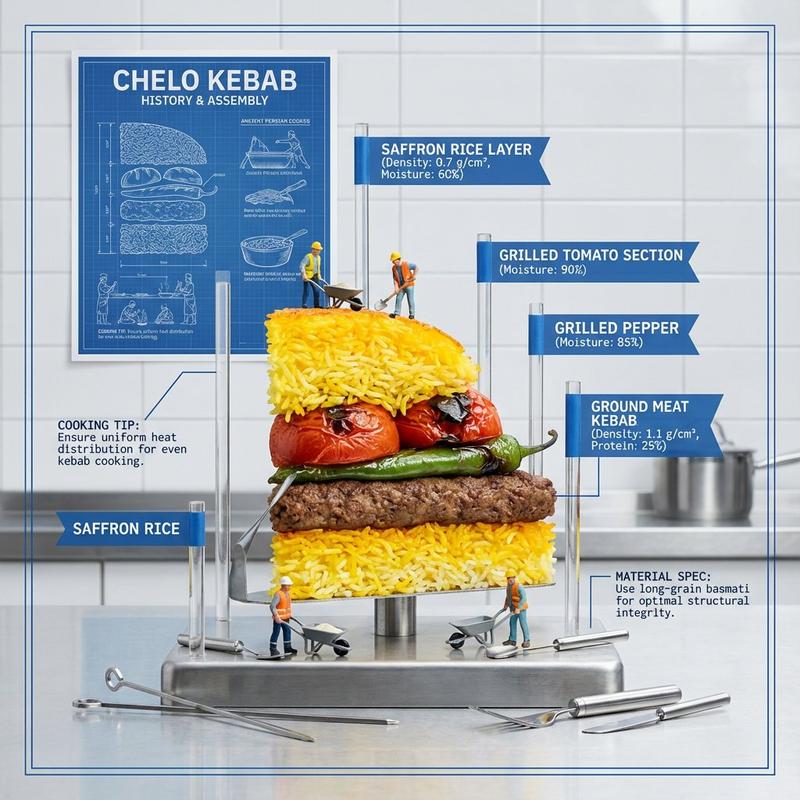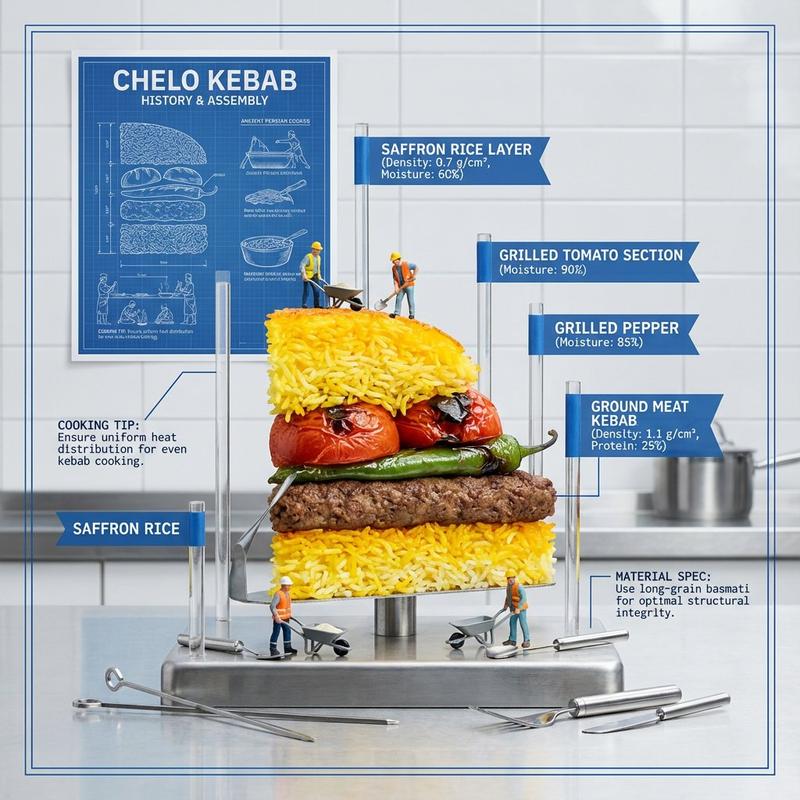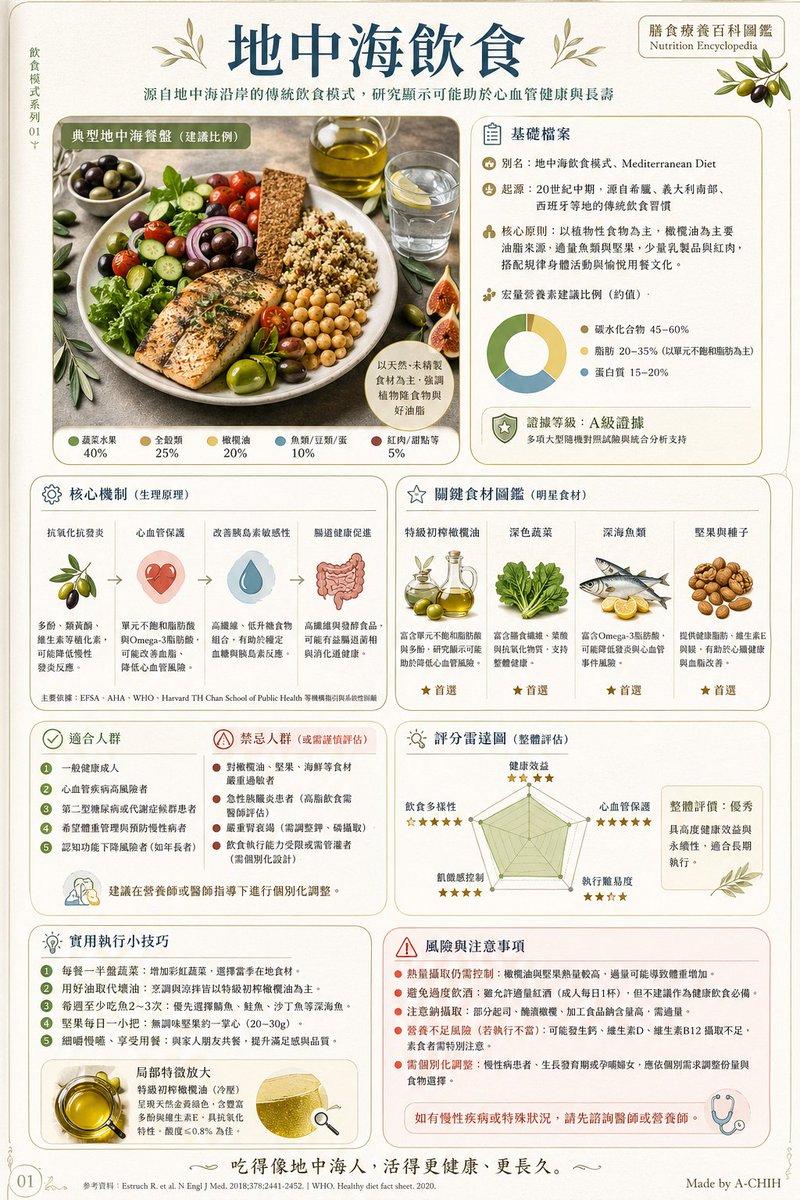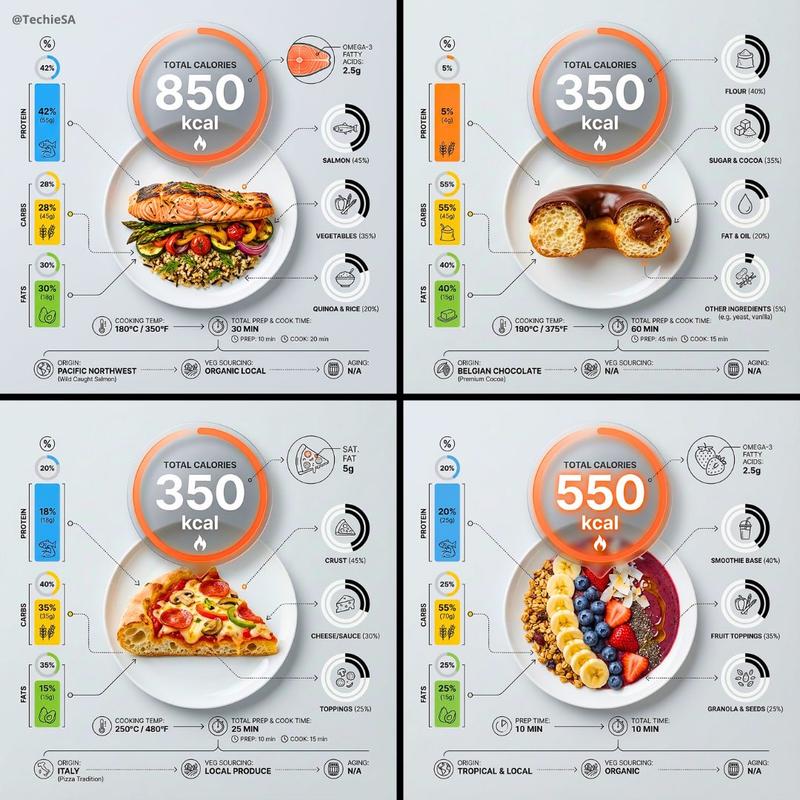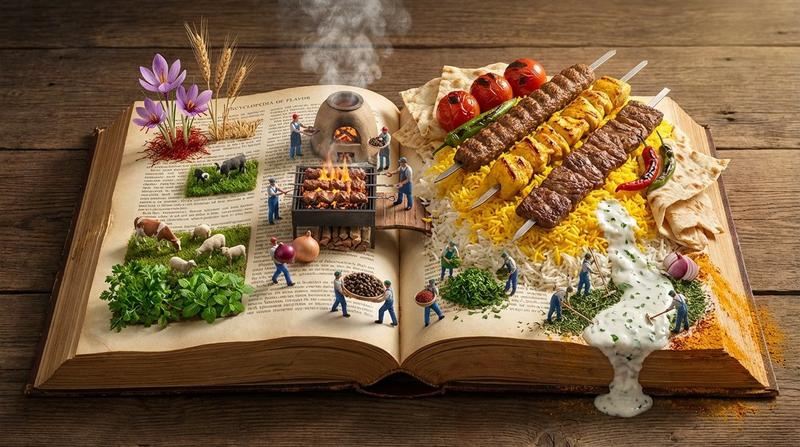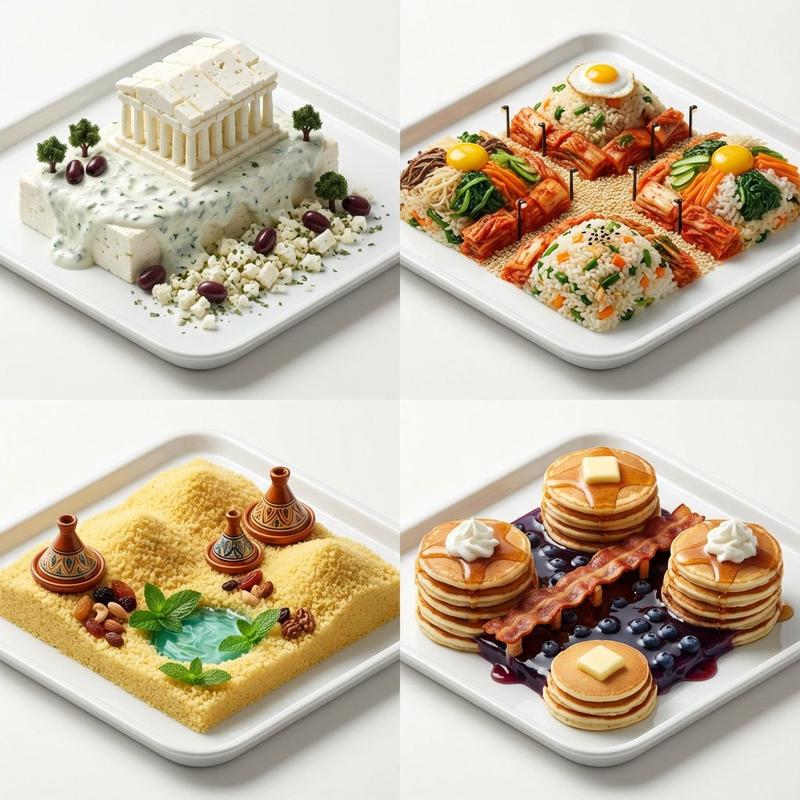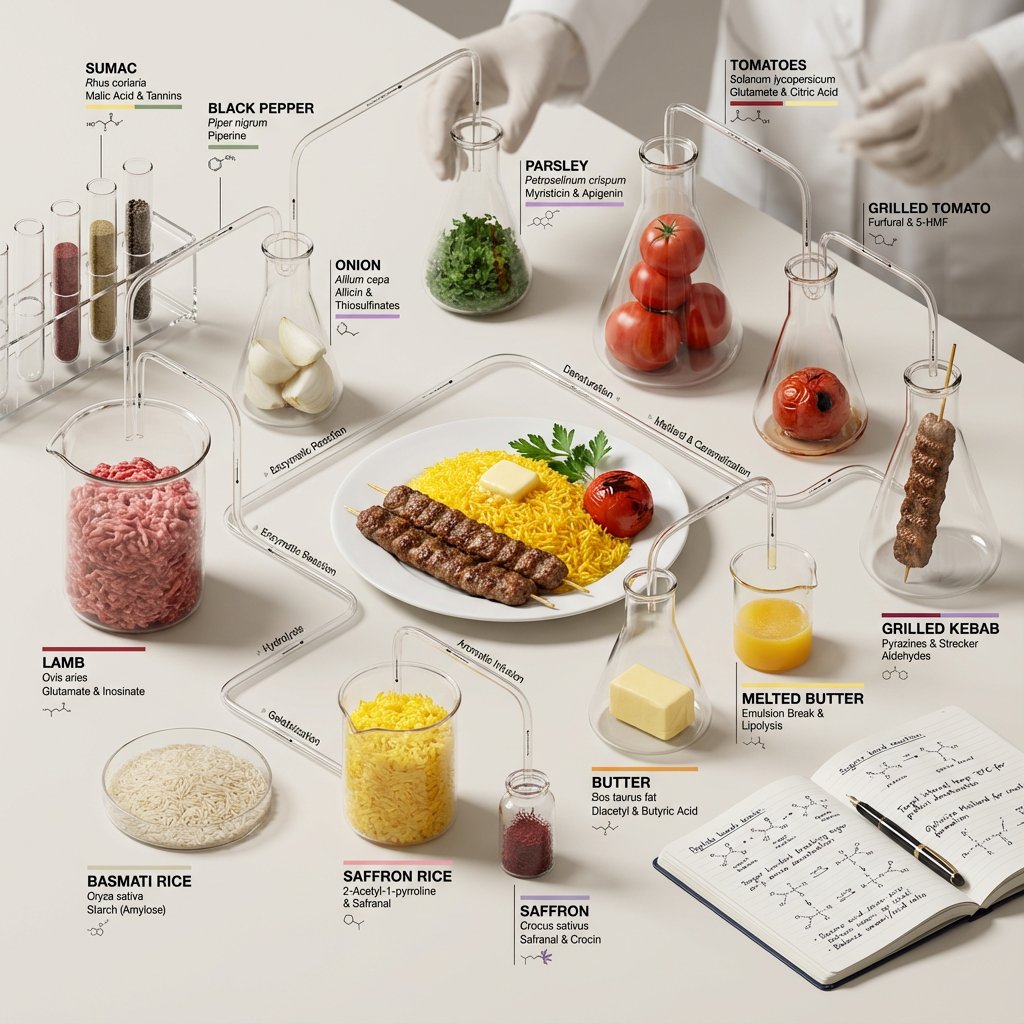
Speaking of mixing science and food prompts, here is one that breaks down your f
提示词
Speaking of mixing science and food prompts, here is one that breaks down your favorite meals. I tried it for a couple of meals. Seems to work well.

Prompt:
<instruction> chelo kebab
 Input A: photo or dish name .

Input A: Analyze the dish’s full ingredient list, key flavor compounds, and major chemical processes (Maillard, caramelization, emulsification, denaturation) involved in cooking it.

Optional Input B: style reference (sterile pharmaceutical lab / Muji minimalism). If missing, choose “sleek modern chemistry lab meets high end coffee-table still life.”

Goal: Create an isometric 3D diorama of a lab bench converted into a tasting station for the dish. Each ingredient is in its own piece of lab glassware, labeled with culinary + chemical information, connected by thin glass tubing showing reaction pathways.

Rules:

Neutral background, matte light gray or off-white, very soft shadows.

Central elevated platform holds a perfect, plated version of the final dish on a white porcelain plate.

Around it, arrange 10–16 pieces of glassware (Erlenmeyer flasks, beakers, petri dishes, volumetric flasks, test tubes in racks).

Each glass item contains:

Realistic ingredient specimen (raw or prepared)

Small label strip with:

Ingredient common name in bold

Scientific/Latin name in smaller text

Primary flavor molecule name + tiny skeletal formula icon

Fine glass tubing connects certain vessels, with small arrow icons and micro text like “Maillard,” “Emulsion,” “Hydrolysis” indicating key reactions.

Use subtle color coding in the label stickers (no big boxes):

Umami (deep red line)

Sweet (soft pink line)

Sour (pale yellow line)

Bitter (sage green line)

Fat (warm orange line)

Aromatic (lavender line)

Include one open lab notebook on the bench with a hand-drawn reaction scheme and cooking notes in fountain-pen ink.

Typography: clean sans-serif like Helvetica Neue, thin weights, lots of white space on labels.

Glassware is ultra-clear with realistic specular highlights, liquid menisci, and slight distortions.

No visible human figures, just gloved hands blurred in the deep background (optional).

Output: ONE image, 4:5 aspect ratio, high-end product / editorial photography style, isometric or ¾ angle, soft studio lighting, hyper realistic materials.
</instruction>
- 分类
- 创意图片
- 模型
- Nano Banana Pro
- 来源作者
- @Gdgtify
- 来源 ID
- 9d95f1d4-df43-4e83-b7da-7de522f5d093
- 发布时间
- 2026年1月25日
浏览量0